

GLP-1 Medications and Your Oral Health
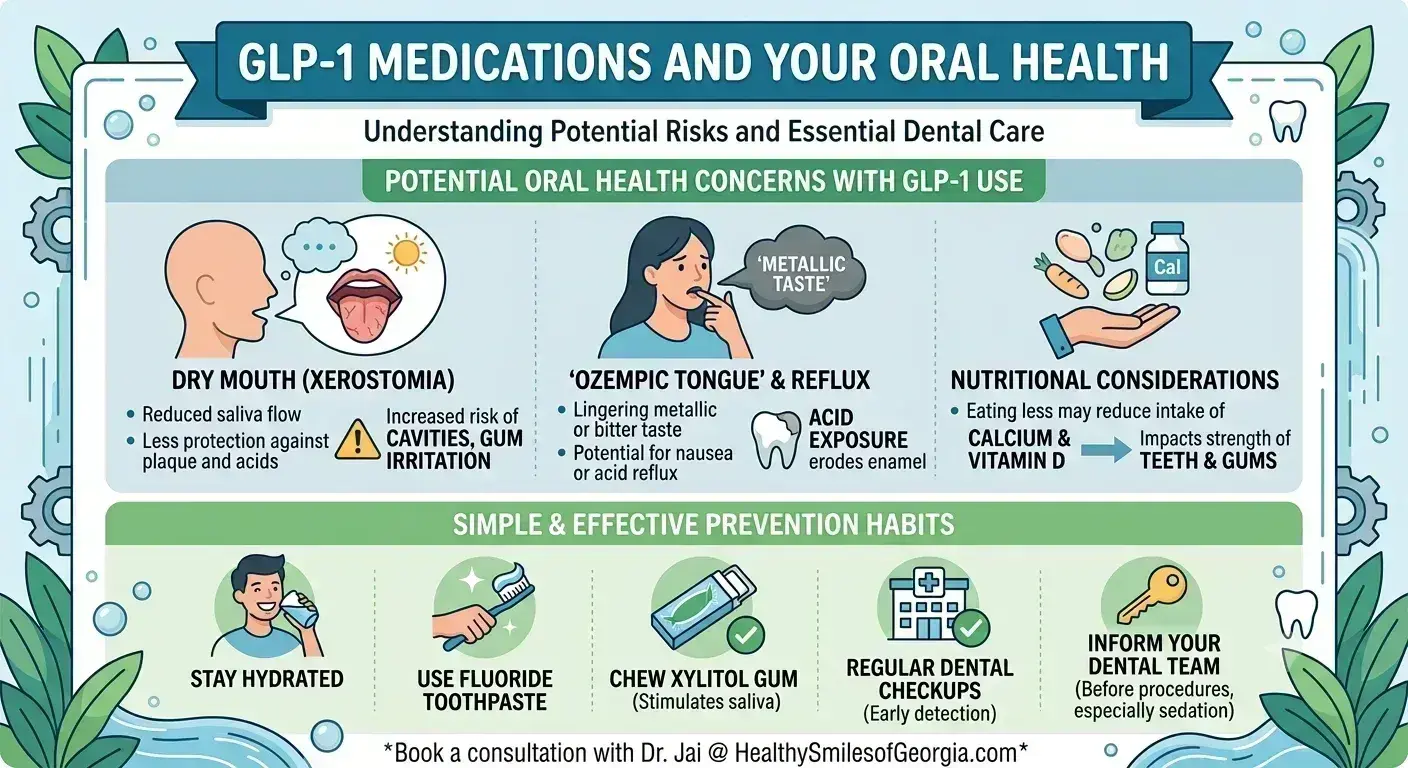
Dry mouth is the main risk. GLP-1 medications often reduce saliva flow, which raises the risk of cavities, plaque buildup, and gum irritation.
Watch for "Ozempic tongue" and acid exposure. A lingering metallic taste is common, and nausea or reflux can wear away enamel over time.
Nutrition matters too. Eating less overall can mean lower calcium and vitamin D intake, both important for healthy teeth and gums.
Always disclose GLP-1 use before sedation. These drugs slow gastric emptying, so your dental team needs to know before any sedation procedure — though routine cleanings with local anesthesia require no changes.
Prevention is simple and effective. Staying hydrated, using fluoride toothpaste, chewing xylitol gum, and keeping up with regular checkups can offset most of these risks.
If you're taking a GLP-1 medication like Ozempic, Wegovy, Mounjaro, or Zepbound, it's worth knowing these drugs can affect your mouth as well as your waistline. The most common issue we see is dry mouth, since reduced appetite and hydration changes can lower saliva flow. Saliva is your mouth's natural defense, so less of it means more plaque, more cavities, and a higher risk of gum irritation. Some patients also notice a lingering metallic or bitter taste, sometimes called "Ozempic tongue," which isn't fully understood but appears related to the same dry mouth effect. None of this means the medication is harmful — it just means your mouth needs a bit more attention while you're on it.
Nausea and occasional reflux, especially when starting or increasing a dose, can expose your teeth to stomach acid and gradually wear away enamel. Eating less overall can also mean lower intake of calcium and vitamin D, both of which matter for healthy teeth and gums. If you have an appointment that involves sedation, please tell us you're on a GLP-1 medication, since these drugs slow stomach emptying. Current guidance doesn't call for stopping the medication before dental work, but it does call for us to ask the right questions and assess your individual risk. For routine cleanings and fillings with local anesthesia only, you can simply continue your medication as usual.
The good news is that these effects are very manageable with a few consistent habits. Stay hydrated throughout the day, chew sugar-free or xylitol gum to stimulate saliva, and use a fluoride toothpaste consistently. Rinse with water rather than brushing right after any reflux or vomiting, since brushing right away can spread the acid across your enamel. Keep up with regular cleanings so we can catch dry-mouth related decay or enamel wear early, before it becomes painful or costly. If you're taking a GLP-1 medication, let us know at your next visit — we're glad to help you protect your smile while you take care of the rest of your health.